
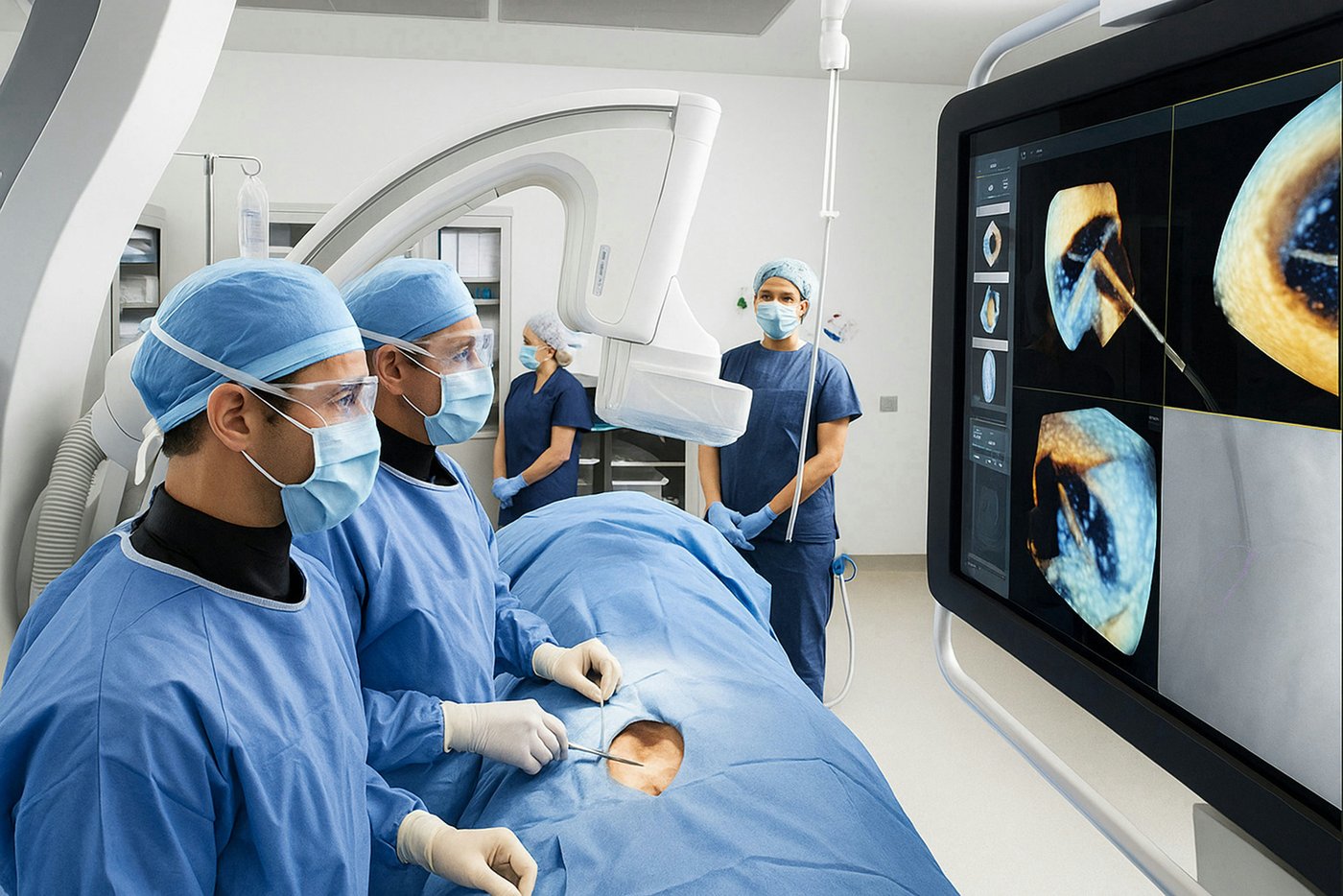
The general and laparoscopic surgery team at Gulzar Surgimed cares for patients across a broad range of surgical needs, using open techniques where clinically appropriate and laparoscopic (keyhole) techniques where the condition allows. Laparoscopic surgery uses small incisions and a camera, which for many patients means less post-operative discomfort and a shorter recovery. Each case is assessed individually, and the surgeon will discuss which approach is best suited to your condition.
About the general & laparoscopic surgery department
General and laparoscopic surgery covers a wide range of common abdominal and general surgical problems. Where an operation is needed, it can often be carried out using laparoscopic (keyhole) or open techniques, depending on what is safest and most suitable for the patient.
The usual approach is to reach a clear diagnosis first, explain the options in plain language, and help each patient understand whether surgery or another approach is the right next step.
Laparoscopic surgery uses small incisions and a camera to carry out procedures inside the abdomen. Because the cuts are smaller, patients often experience less pain after surgery and may recover more quickly than with a traditional open approach. Not every condition is suitable for keyhole surgery, and your surgeon will explain which technique is recommended for your situation.
Common reasons patients seek care
Patients are commonly referred to general & laparoscopic surgery for assessment of concerns that may include:
- Abdominal pain that is persistent, worsening or unexplained
- A lump or swelling in the groin, abdomen or umbilical area
- Groin swelling that appears on straining or standing
- Gallbladder-related symptoms such as pain after meals, nausea or bloating
- Suspected gallstones or known gallstone disease
- Symptoms suggestive of appendicitis, such as right-sided lower abdominal pain with fever
- Digestive symptoms that may need a surgical opinion
- Bowel-related surgical concerns, including changes in bowel habit with pain
- An abdominal mass or lump that needs evaluation
- Persistent nausea or vomiting when a surgical cause is suspected
- Unexplained abdominal swelling or distension
- Surgical wound problems or postoperative concerns
- A breast lump that needs surgical assessment
- A thyroid or neck lump that needs surgical assessment
- Skin or soft tissue lumps that may need excision
- An abscess that needs drainage
- Conditions that may benefit from minimally invasive surgical assessment
Common conditions
The general & laparoscopic surgery specialty commonly involves the assessment of conditions that may include:
- Inguinal hernia (groin hernia)
- Femoral hernia
- Umbilical hernia
- Incisional hernia (hernia at a previous surgical scar)
- Epigastric hernia
- Gallstones and gallbladder disease (cholelithiasis)
- Acute and chronic cholecystitis (gallbladder inflammation)
- Appendicitis (acute and recurrent)
- Abdominal wall hernias and defects
- Bowel conditions that may require surgical assessment
- Small bowel obstruction
- Abdominal masses or lumps needing evaluation
- Abscesses of the abdominal wall or soft tissues
- Soft tissue lumps such as lipomas or sebaceous cysts
- Selected breast conditions that need surgical assessment, such as breast lumps
- Selected thyroid and neck lumps that need surgical assessment
- Adhesion-related abdominal problems
Treatments and procedures
Treatment options depend on your individual condition. Depending on the diagnosis, your doctor may discuss approaches that can include:
- Laparoscopic (keyhole) surgery where it is suitable for the patient and condition
- Open surgery when it is the safer or more appropriate option
- Planned and day-case procedures, depending on the diagnosis
- Conservative management and observation where surgery is not immediately needed
- Medication-based management as part of preoperative or postoperative care
- Wound care and management of surgical site concerns
- Follow-up and postoperative review
Procedures
Depending on the diagnosis, procedures in general & laparoscopic surgery may include:
- Laparoscopic cholecystectomy (keyhole gallbladder removal)
- Diagnostic laparoscopy to investigate unexplained abdominal symptoms
- Hernia repair, including open and laparoscopic approaches
- Appendectomy (removal of the appendix), open or laparoscopic
- Open abdominal surgery where the condition requires it
- Abscess incision and drainage
- Excision of skin and soft tissue lumps
- Surgical assessment and biopsy of breast lumps
- Surgical assessment and biopsy of thyroid and neck lumps
- Bowel surgery where indicated by the diagnosis
- Management of surgical wounds and postoperative complications
When to seek specialist care
Patients may seek assessment for ongoing or sudden abdominal pain, a visible lump or swelling in the groin or abdomen, symptoms related to gallstones, features of appendicitis, or when another doctor recommends a surgical opinion. Breast lumps, thyroid swellings, soft tissue lumps and abscesses that may need surgical treatment are also common reasons for referral. Your doctor will examine you and may arrange blood tests, an ultrasound or other imaging before discussing whether surgery is needed.
What patients can expect
At a first consultation, the surgeon reviews your history, examines you, and looks at any previous scans or reports you bring. If further tests are needed, these are arranged and explained. Treatment options depend on your individual condition, and your doctor can explain the likely benefits and risks of each approach so you can make an informed decision together.
Booking a consultation
You can request an appointment with the General & Laparoscopic Surgery team using the appointment form, or by calling the hospital on 0300 9687763. If you have previous imaging or reports, please bring them to your appointment.
Consultants in General & Laparoscopic Surgery
 General & Laparoscopic Surgery
View profile
 General & Laparoscopic Surgery
View profile
 General & Laparoscopic Surgery
View profile
 General & Laparoscopic Surgery
View profile
Ready to book an appointment?
Speak to the team about the right specialist for your care.
